
Interview with Dr. John Knab.
Interventional pain management and regenerative medicine.
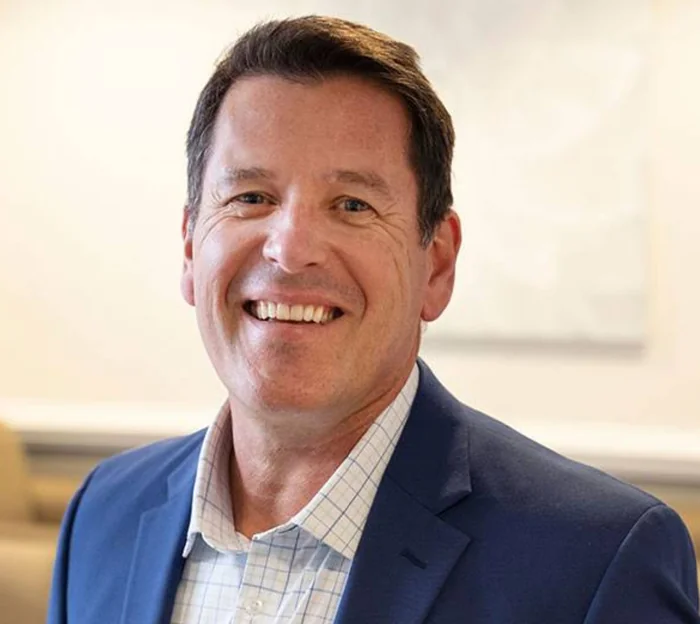
The conversation nobody has time for in a 12-minute visit
If you have lived with pain long enough, you have heard the options at speed. An injection. A scan. A referral. Maybe surgery, eventually. What rarely gets explained is what each of those things is actually for, and what it cannot do on its own.
So we sat down with Dr. John Knab, an interventional pain management specialist, to talk through interventional pain management and regenerative medicine. The video and the full transcript are both below, unedited.
Why this matters to our patients
Plenty of people arrive here after months of being handed one option at a time by different offices, with nobody connecting them. Understanding the whole menu makes you a better advocate for yourself, whatever you decide to do.
It is also honest about our own lane. Physical therapy is not the answer to everything, and knowing where it fits alongside pain management is part of getting you out of pain for good.
The full conversation
Dr. Joshua Lyon: Hi everyone, I’m Joshua Lyon, a physical therapist and the owner of AIM Advance In Motion Physical Therapy and host of the provider spotlight series. With us today is Dr. John Knab. He is board certified in both anesthesiology and pain medicine. He’s an interventional pain management specialist specializing in regenerative medicine and non-surgical spine and joint care. He is the founder here in town of the Center for Pain Management and Regenerative Medicine, and also the founder of Elite Spine & Joint, which focuses exclusively on regenerative therapies. Outside of his very busy professional life he enjoys time with his family, being active in Wilmington, and, rumor has it, a very strong love for pizza making, having owned over 10 different pizza ovens. I want to dig into that a little bit here, but ultimately, and I can resonate with this as a physical therapist, it’s truly rewarding seeing people regain function and get back to activities they love without going down the road of major surgery or long-term medications. I know you’re going to learn a ton from him and I’m thrilled to have you on the show. Thanks for joining me, Dr. Knab.
Dr. John Knab: Thank you for having me. I appreciate it.
Dr. Joshua Lyon: Yeah, absolutely. Usually we dive right in and hear a little bit about your background and your story, but I do have to ask about the pizza making. We’re going to kick off with more of a personal note versus a professional one, because that is unique, and as a lover of pizza myself, tell me a little bit about that hobby.
Dr. John Knab: Right, well, I think it goes back to childhood. It’s always been one of my top five favorite foods. Maybe about 2010 I started trying to make pizza on my grill and then it just blossomed from there. Before you know it I had basically a professional wood-fired oven in my backyard. But when that’s too big to fire up and I’m only cooking for two or three people, of course I need a different size pizza oven. So that’s why I ended up getting probably a total of ten throughout the years since then, but I think I’ve whittled it down to, one, two, three, four, probably down to five.
Dr. Joshua Lyon: You’re scaling back your operations here, okay.
Dr. John Knab: Scaling back, yeah. Trying to downsize. But it’s cool, so maybe one day we can get together and you can have some of my pizza.
Dr. Joshua Lyon: Absolutely. Let me know when the to-go orders are available, I’ll swing by and grab some. But I know most people watching this are going to want to know more on the professional side of things, so let’s dive in. I always love hearing your story, what got you into healthcare, specifically pain medicine, and your overall approach to care. What’s your story there?
Dr. John Knab: Sure, so rapid fire: my dad was a doc, he was a surgeon, and I liked going into the hospital with him and seeing how it worked. I thought the whole organization of medicine was cool, and that was my earliest exposure to medicine. I ended up doing premed, and I was also a Spanish major and premed major at Middlebury up in Vermont. Then I went to medical school at the University of Vermont, and from there went out to Seattle to do an anesthesia residency. During medical school you cycle through all the different specialties. I thought surgery was going to be my calling, but it turns out that another love of mine, being on the water and doing stuff, would interfere with the surgical demands. So I thought, well, I like the procedure-based stuff, I like the chemistry and biology, and I also like procedures, so anesthesia was a good fit. I went out and did an anesthesia residency in Seattle, and as I was getting towards the end of that, I realized this wasn’t quite what I had envisioned for the rest of my life. It was challenging, it was great, a lot of pharmacology, a lot of physiology, but I was missing the patient interaction. Obviously you meet the patient before surgery, but for the majority of your interaction with that patient, they’re asleep. Pretty limited conversation at that point.
Dr. Joshua Lyon: Pretty limited conversation.
Dr. John Knab: So a lot of my favorite times were in the preop clinic, evaluating patients prior to surgery, getting their histories, finding out why they were going into surgery, and that’s what really intrigued me. I came upon this field of interventional pain management towards the end of my anesthesia residency, and I ended up doing a fellowship in interventional pain management in San Diego at the University of California. Since then it really kind of found me, and it’s been what I’ve enjoyed doing for the majority of my professional career. How it morphed into regenerative medicine was the maturation of me as a physician, as a person, looking at what we were doing. I unfortunately came up through this system right at the peak of the time where everyone was saying we must treat pain with narcotics, which we obviously all know now is a terrible idea, but that was what was being pushed on us by the educational system at the university level back in the 1990s. I realized a lot earlier than most that this was something that I didn’t like, and we got away from that earlier than most. Then it got me thinking about other things we do, the steroids that we use, the burning procedures with radio frequency that we use, which are fine and have a role, but what if there’s another way, what if there’s a way we can slow down the disease process with things that come from us, our own cells, our platelets, our stem cells from our bone marrow. What if there were a way we could use our own bodies to help heal ourselves? So around 10 or 11 years ago I started looking into this regenerative medicine field, and that’s kind of how it started. The way I approach everyone in my practice now is I look at the problem, try to figure out what’s going on, and for each individual there are different options. I don’t think steroids are all bad, I don’t think radio frequency is all bad, and I don’t think PRP and stem cells are always the answer either. I like to have as many tools in my toolbox as possible. I’ve really been trying to sort out the real stuff from the false stuff, and we can get into that if we have time. I’m trying to help patients understand what their problem is and then give them options so they can pick and choose how they want to treat it, not just live with the pain or go to surgery. There’s a lot in between. So that’s kind of where I am at this point in my career, and yeah, that’s what I do.
Dr. Joshua Lyon: I love that, especially the fact that you’re taking the time to present the options to the patient, not just slapping a band-aid on and covering up the pain, but getting to the root cause and then providing them with options for how they can deal with that and, ideally, live a fuller life. So that’s wonderful. Who do you typically see coming through your clinic? What’s the ideal patient profile, or what specifically do you treat, what’s the most common thing you’re seeing day to day?
Dr. John Knab: We’re primarily spine focused, that was my earliest training, doing all sorts of injections for people with bad disc conditions, arthritis in the spine, but we also treat peripheral joints, shoulders, knees, hips. The ideal patient for me is someone who is catching things earlier rather than later. My youngest patient was probably maybe 12 or 13. My oldest current patient is 101, and surprisingly we see some 90 to 101 year olds with decent-looking joints and spines.
Dr. Joshua Lyon: That’s amazing.
Dr. John Knab: It’s amazing. But the healthier the tissue is that we’re trying to treat, the more I enjoy the challenge of trying to keep that tissue in the person’s body rather than taking it out and putting in a metallic implant of some sort. If I have tissue to work with, I don’t care what your age is. I don’t care whether you’re 80, I don’t care whether you’re 18. If there’s tissue that we can work with and you’re a candidate for it, I like working with those patients, because I want to not just improve pain, I want to improve function, I want to improve how these patients are approaching life. That’s obviously where my interaction with all you guys, physical therapists all over the area, comes into play. I can help the pain, but it doesn’t help if your muscles are all atrophied and you haven’t used your spine in four years and you don’t know how to engage your glutes. Treating pain is worthless if you can’t improve function. So the more I have someone who’s motivated to not just feel better but do something with their bodies once they feel better, that’s the perfect candidate for me, no matter the age.
Dr. Joshua Lyon: I love that, having the active participant beyond just, hey, fix the pain, but let me actually get back to doing what I love doing, or do new things I didn’t think were possible because pain was limiting me before. That’s got to be super rewarding.
Dr. John Knab: It is.
Dr. Joshua Lyon: Yeah, so what are some of the most common conditions you’ll see coming through the clinic?
Dr. John Knab: Okay, so back pain. Most of us are going to experience back pain at some point in our life. Admittedly, even until I was a couple years out after my fellowship, I didn’t really understand the complexity of back pain. You don’t really understand how complex the spine is until you get into it and start seeing and treating patients, and realize what made patients feel and function better and what didn’t. I see a lot of patients narrowing it down into disc problems. The discs are the spacers between the bones that allow us to twist and bend. Most of the time we think about people coming to the doctor when they’ve got a disc that’s blown out, a herniated nucleus pulposus, that’s the most common thing we see. But a lot of times a patient comes in, and it’s not that they’ve got sciatica or an acute episode, it’s these recurring episodes of pain where their back locks up, they get all cockeyed, and they can’t sit, stand, or bend, and then it takes them weeks to get better, and then it happens again in six months or twelve months. Those presentations are a little more challenging, but we see them commonly, where it’s not just a disc pushing on a nerve, it’s a disc that’s degenerated, and it may even be leaking some of the chemicals that are inside the disc. The center of the disc is like a jelly donut, and once that stuff starts leaking out, it gets into the spine, it might cause irritation of nerves, but it just causes that super tight feeling in your back and you really can’t do anything. That’s a patient I see very commonly, being a spine-centric practice, and we can do a lot of different things for those patients. Figuring out where the pain’s coming from is the first and most important thing, so that you can begin to tailor treatments.
Dr. Joshua Lyon: So someone dealing with that, it starts impacting their time out, all those times on the sideline, loss of function, loss of motivation, because there’s this constant fear that it’s going to happen again in three months. What do you offer them? Maybe talk about where the regenerative medicine approach comes into play, who that would be appropriate for, when you’re laying out the options for folks.
Dr. John Knab: Again, coming back to diagnosis, what is it that’s causing you to be here. We see things like poor sitting tolerance, that’s pretty common when a person has a disc problem. If they have these recurring episodes, it’s probably something at the disc level. So the first thing is, what have you done conservatively? We always make sure they’ve at least tried some strengthening exercises, making sure their iliopsoas isn’t too tight, making sure their multifidus isn’t too atrophied. We look at the MRI, we can see multifidus atrophy on MRI. You look at the MRI and see stuff up at L1, L2 that looks like filet mignon, not much fat in it, and then you get down to the lower lumbar spine and it looks riddled with fat. That patient isn’t engaging their paraspinous muscles. So the key is, you need to engage that stuff, we need to get you moving, and then you run into the problem of, I’m in so much pain I can’t do that, and that’s where steroids aren’t always all bad. I can use a steroid to get most people out of pain for a brief period, weeks to months, so they can start moving. I send them back to you guys, and you can work with them. Once we’ve unlocked that locked and frozen state of the spine, then we can start talking about how to arrest this inflammatory process, maybe not fix it, but fix it with the best band-aid we know, which is oftentimes the platelets from our own blood. I see a lot of young, active runners who haven’t run in two years, tennis players, pickleball players, who just haven’t been able to do it because it tweaks their back so much. I get them to understand this is not in their head, they might have been told their spine looks fine, and just because the surgeon doesn’t want to operate on you doesn’t mean your spine is fine, it’s not a surgical problem, but it is a problem. Once I can show a patient I can make them feel better, I get a foot in the door showing their brain and nervous system that they actually are fine, they just need to settle down this inflammatory and degenerative process. Then we can look towards things that are less destructive, not using steroids anymore, not burning nerves or joints. We can use platelets to inject at multiple places in the spine. A typical PRP procedure for the spine will involve treating all of the facet joints, the muscles, the epidural space, the SI joint, and the ligaments that hold our bones together, all done in the same day while the patient is comfortably sedated in our office. Those patients surprisingly don’t have a lot of pain afterward, maybe for a couple days, then they come back about a week later and start using some of our machines, like cold laser, to improve blood flow and reduce pain. We have shockwave, both focused and radial, to help heal muscle, ligament, and tendon tissue, and another one called EMTT, extracorporeal magnetotransduction therapy, which also helps nerves, muscles, and ligaments heal faster. We use those machines to speed the process of healing along. My idea of success for that person is once they’re over that acute phase of pain and inflammation after the procedure, maybe two or three weeks in, we send them back to physical therapy. We work with some of the chiropractors in town who really help mobilize things and get that patient functioning normally again. The success is when I forget about that patient. I see them back for a follow-up at about the two-month mark to make sure they’re doing okay, and then some of these patients I don’t see again until I hear about something else going on, maybe six or eight years later, and they’ve been doing fine for years. That’s such a different feeling for me than seeing someone every two, three, four, five, six months for steroid injections. It feels like the right thing to do. I’m giving these patients their lives back, their bodies back.
Dr. Joshua Lyon: Truly restoring them back to health, right, letting them thrive.
Dr. John Knab: That, to me, is the essence of medicine. If we can use our own bodies to heal ourselves, that’s great. Sure, there may be things coming down the road with more purified versions of actual stem cells that will come out of clinical trials that have demonstrated safety and efficacy, but that’s probably still a little off in the distance. Along the way I’m also trying to tell patients that what you hear on the internet, the ads you get in your mailbox for a free dinner saying someone will come to your house and give you stem cells, that’s fake, it’s fraud, and it’s bad, and people can get hurt. I’m always trying to emphasize, if it sounds too good to be true, it very well may be, especially in the regenerative medicine field. I’m a little old-fashioned about things that aren’t well studied, and definitely things that are illegal I stay away from, things like exosomes and umbilical cord stem cells, those are plain illegal at the federal level for the entire United States. You can go to places like Florida and Texas with right-to-try laws where you can do it, but I’m pretty conservative, and I’m going to use things that come from you and go back into you the same day, which is what the FDA says is okay. I know people are really into GLP-1 peptides right now, and I’m not against it, but I don’t do it.
Dr. Joshua Lyon: Fair enough. What about folks who delay care, because we’re all stubborn to a certain point, thinking it’ll get better in time, and then it doesn’t, and now it’s somewhat debilitating. What would your message be to folks who are on the fence, even with a more recent injury: don’t wait, get it addressed early, well before it becomes debilitating?
Dr. John Knab: Yeah, moving away from the spine and towards peripheral joints, we see a meniscus tear that’s small, we can heal that with PRP, we can heal that with shockwave even. But the more you let that go, the more of a negative, inflammatory, destructive environment builds at the source of the injury. Some athletes tear their ACL, and if it’s not fixed, there’s such an inflammatory and biomechanically off problem that it leads to early onset arthritis, whereas if they had addressed it right off the bat, they’d be neutral, just like any other patient whose ACL was fixed immediately. That’s an extreme example, but it carries forward to almost any injury. If you haven’t had a good evaluation and don’t know your diagnosis, you don’t know if you’re causing more harm by not treating. At the very least, go get a hands-on evaluation. We do point-of-care ultrasound in our office, so you can come to me, and that same day I can look at your shoulder that’s been bugging you for three years and say, you’ve got a good-looking rotator cuff, no arthritis of your AC joint, no major arthritis of your glenohumeral joint, I think you’ve got a subacromial bursitis, and I can tell you that right in the office. I can put on a color Doppler and show you the blood vessels pulsating in areas where they’re not supposed to be, that’s where your pain is coming from. I can show you that and treat you, without X-ray, without MRI, a lot of stuff right in the office, very quickly, if you go to the right type of person. That’s the other part of our practice I really love, being able to put hands on, examine, and then stick the ultrasound probe on your shoulder or your knee. I can show you a 40cc fluid collection in the top of your knee, that’s why it feels stiff, not just something you’re imagining. I can show you your meniscus tear, I can show you a Baker’s cyst. It’s a lot of fun.
Dr. Joshua Lyon: That’s amazing. First visit, they come in and see that visual too, so when you’re pointing it out to them it makes sense, it’s not a torn rotator cuff, here are these other things that could be contributing, and you can show them right then and there without doing anything invasive. That’s incredible.
Dr. John Knab: Yeah, you don’t need an MRI. It’s amazing how many people are terrified of MRIs, or just hate them, because of bad experiences. I love my MRIs, don’t get me wrong, but ultrasound is sometimes better than MRI for some of the superficial things we look at. Thumb arthritis, carpal tunnel, I can do a carpal tunnel exam right in the office, tell you whether it’s swollen or inflamed, and since we’ve got two, I can compare right to left. This one looks big and this one looks normal, and with that color Doppler I can show you the blood flow, which you don’t get on X-ray or MRI, it’s really something unique to ultrasound. Tennis elbow, golfer’s elbow, it’s so great to be able to see this stuff in real time, we can show people very quickly what’s going on. I’d encourage people to seek out that type of doc, there aren’t a lot of people doing musculoskeletal diagnostic ultrasound around, but there are a couple of us in town. It’s easy, it’s painless, it’s quick, it’s rewarding, and it’s very inexpensive, usually covered by insurance. Getting answers about where the pain’s coming from is absolutely the first step, and ignoring it is the wrong direction in my opinion.
Dr. Joshua Lyon: Yeah, the fact that you’re providing answers, that’s all people want, they want to know what’s going on, why is this hurting so bad, and give me a path forward, what are my options. So people watching this, for a dozen different reasons, but fear of the unknown being one of them, what should they expect when they come to see you, and how can you manage that expectation and reassure folks?
Dr. John Knab: There’s a lot of misconception about what interventional pain management is. We’re not pushing drugs, we’re not giving narcotics, we’re not trying to get you hooked. We’re using needles and usually some sort of injection to target things specifically, and we’re doing it not just by feel, where does it hurt and inject it, we’re doing it very specifically, guided by ultrasound or fluoroscopy. Before we do any of that, we have to get the diagnosis, so the first visit is talking, examining, and maybe an ultrasound, nothing painful. We just want to get to the bottom of what’s causing the problem. Depending on what happens, I might say you need X-ray, ultrasound, MRI, CT scan, or some lab testing. When it comes time to do an actual procedure, some people don’t have a problem with needles, other people won’t have anything done because it involves a needle. We prescribe Valium for people who are nervous, we have a nitrous oxide machine, laughing gas, for some of our bigger procedures that take longer, and we have tablets called MKO Melts, originally designed for people having cataract surgery, that go under the tongue, midazolam, ketamine, and ondansetron, and they make you very goofy and loopy and you won’t care for 45 minutes to an hour what’s going on. Even for the bigger procedures we give IV medications, I’m an anesthesiologist, so we give low levels of sedation for patients who need it. There’s really no reason to be anxious about anything we would do, because we’re going to make it as comfortable as possible while we’re doing it. All you need to do is express those concerns, express your natural fear of needles if you have it. That shouldn’t be a barrier for anybody.
Dr. Joshua Lyon: I love that, great options. Any final thoughts for anyone watching this that you’d like to share about yourself, your practice, anything helpful for them?
Dr. John Knab: Well, my partner and I both have more enthusiasm for what we’re doing now than when we first came out into practice. The way most people come to find us is either word of mouth from their physician or from a friend or family member who’s come to see us. We’re slowly but surely building our library of videos about the conditions we treat, along with some testimonials from patients, on the Elite Spine & Joint site on YouTube, that’s a good place for people to look at what we’re doing. There are a lot of videos we’ve tried to put together to help educate people, and that’s why I do it, I’m trying to demystify things for people. I’d encourage patients to go onto our websites, elitespinejoint.com or portcitypain.com, both have a lot of educational material and links to some of the videos as well. If you’re even thinking there’s something we might be able to help with, I’d encourage patients to go to one of those three places, the YouTube channel or the two websites, for further information, and I’d love to be able to help sort things out and make people feel better. So come and see me.
Dr. Joshua Lyon: Awesome, and on those websites they can reach out to your office, schedule appointments, all of that.
Dr. John Knab: Absolutely.
Dr. Joshua Lyon: Okay, awesome. Well, thank you for your time today. I know everyone’s going to love learning more, demystifying things around pain management, not the narcotics, really getting to the root cause of what’s going on and then the options they have to get that treated and back to a healthy life. Thank you for your time, I know everyone’s going to love seeing this, and we look forward to talking to you soon.
Dr. John Knab: Thanks, Josh. Have a great weekend.
If you are still deciding
You do not have to have it figured out before you call. Start with a cause-first evaluation, one-on-one with a Doctor of Physical Therapy, and leave knowing what is wrong and how long it should take. Call (910) 782-2150 or request an appointment.
More conversations in the Spotlight Series.
Book Your Visit
Ready when you are.
Request a time and a real person calls you back, usually within two business hours. No phone tree. No ‘someone will reach out.’ Just a plan.
- Hours Monday to Friday, 7:00am to 5:30pm
- (910) 782-2150 Prefer to talk now? Call us.
- No referral needed to start
5.0 · 200+ Google reviews
Typical response: under 2 business hours
Step 1 of 5
Request sent.
That’s the hard part done. We’ll call during business hours to lock in your time.