
Interview with Dr. Charles Black.
Adult reconstruction: hip and knee replacement, and what to expect.
“You don’t get to tell me how bad I’m hurting”
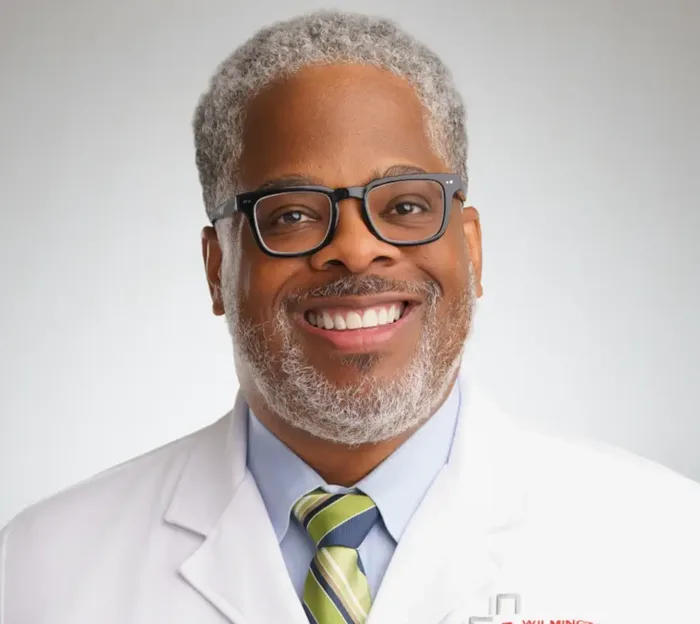
Dr. Charles Black is a board-certified orthopedic surgeon at Wilmington Health, fellowship trained in adult reconstruction, which in his words is a fancy way of saying he likes complex hip and knee surgeries. In this episode of the Spotlight Series he talks about his journey as a surgeon, the patients he treats, and an approach to care built around how the patient actually feels.
Watch it for a personal look at Dr. Black’s care and the patient experience: what to expect, how he can help, and how to get in touch with him. The video and the full transcript are both below.
The full conversation
Dr. Charles Black: I don’t get to tell you how bad you’re hurting. My job is to kind of help you understand what’s going on and know it’s not in your head. And it’s not my ego or my hubris that could tell you, oh, it’s all in your head. That’s just really not the business that any of us are in. You know, we’re just machines and you know, as you kind of use this machine and kind of keep it oiled and keep it loose and keep it lubricated.
You know, this machine, this beautiful machine that God gave us will kind of last you for a lifetime. Knee replacements are a little more painful, period. For a hip, you have to get your Rubik’s cube kind of unjumbled. You just have to start walking and trust that that’s going to hold you.
Dr. Joshua Lyon: Hi everyone, I’m Joshua Lyon, a physical therapist and the owner of AIM Advance In Motion Physical Therapy and the host of the provider spotlight series. With us today is Dr. Charles Black. He is a board-certified orthopedic surgeon. He is fellowship trained in adult reconstruction. Originally from Detroit, Michigan, went to college out at Hampton University up in Virginia. Uh rumor has it pretty fantastic chef. Perfected the Bolognese recipe. Uh, and currently orthopedic surgeon here in town at Wilmington Health. I know you’re going to learn a ton from him. Thrilled to have you on the show. Thanks for joining me, Dr. Black.
Dr. Charles Black: Thank you very much for having me. And uh that Bolognese is fantastic. My six-year-old agrees.
Dr. Joshua Lyon: Oh, you got if you got a six-year-old eating, it’s got to be something cuz they’re they’re pickers typically. So, that’s awesome. Well, uh we’ll dive right in here today. I know a lot of folks want to hear about kind of your background, what got you into medicine.
So, let’s let’s start there. What got you into medicine, and then more specifically, uh become an orthopedic surgeon.
Dr. Charles Black: Sure. No, you know, I think uh my interest in medicine kind of started from early age. Um really enjoy kind of taking care of patients. Um originally kind of wanted to be a chemist uh which doesn’t have anything to do with patient care uh but you know kind of that science kind of background. Uh got involved in a program in college that kind of introduces you to the biomedical sciences and it was kind of all she wrote from there. got it started with orthopedics through medical school, you know, uh just doing different experiences and exposures and really liked what orthopedic surgery kind of represented, which was taking care of patients and getting them back to activities and life and what they enjoy doing. And so I feel, you know, doing orthopedics is a calling and I feel very honored and grateful to be able to kind of be an orthopedic surgeon and get patients back to normal, to their normal. And if that’s being with family, being with friends, bowling, playing golf, whatever that looks like for them and uh that’s what I really enjoy about orthopedics and and uh and and enjoy providing that for patients and being a part of their care team.
Dr. Joshua Lyon: I love that. Yeah. Getting them back to whatever it is they love doing, you know, making it specific to their goals, expectations, lifestyle, all that kind of stuff. Um awesome. You mentioned uh yeah, you feel like it was a calling.
Was there any specific event that sealed it for you in your mind that, yes, I want to be an orthopedic surgeon, or just kind of the experiences going through med school?
Dr. Charles Black: Yeah, nothing personal for me. You know, it wasn’t like I had a statement for, you know, a personal kind of injury in high school or anything like that. Um, I will say that my mother has kind of gone through the litany of orthopedic surgery, uh, conditions. She’s had both her knees replaced and the hip replacement. And um I share this story with patients in the office when she uh had her knees replaced. you know, you walk in and you see your mom, you look at the X-rays, you say, “Oh, your X-rays aren’t that bad.” And what she said to me, uh, as parents often do in colorful language is, uh, you don’t get to tell me how bad I’m hurting. And as a training, uh, physician, you know, you kind of take a step back, but as a son, you’re like, “Wait, wait, wait, what did I do wrong? What did I do?”
And, um, her statement to me is really kind of the cornerstone of my treatment philosophy. I don’t get to tell you how bad you’re hurting. My job is to kind of help you understand what’s going on and know it’s not in your head, it’s in your knee or it’s in your hip or it’s in your shoulder or whatever that is and let’s come up with a plan to kind of navigate that. When I remind my mother of that story, she vehemently denies it. Oh, I wasn’t that mean to you. I didn’t do that to you.
But, you know, it’s a learning point, right? People are very in tune with how they feel. And it’s not my ego or my hubris that could tell you, oh, it’s all in your head. That’s just really not the business that any of us are in, right?
You know, the the business is kind of to sit down and hear patients and uh treat them as people and try to help help them understand what their options are and help them make the best decisions for them and their family. So, if anything, you know, it’s not so much a story that kind of got me into orthopedics, but more of a story about how I try to treat patients now being an orthopedic surgeon, if that makes sense.
Dr. Joshua Lyon: Yeah, I love that. And and so many times we talk about, you know, while maybe my 100th to knee that I’m treating, uh, it’s their first and that experience that, you know, their pain levels, their experience, their limitations is is unique to them. And and having that kind of top of mind knowing that it’s their experience, it’s their first time going through it. Um, I think really sets the framework for yeah, how we deliver such excellent care. So that’s that’s wonderful. We’ll talk a little bit about the patients then that come to see you.
So, in adult reconstruction, are you primarily seeing joint replacements? I know everything under the sun with muscle, tendon, ligament, bone, that’s your wheelhouse. Um, but yeah, talk about types of patients that are seeking you out. What specifically, uh, does that look like?
Dr. Charles Black: Sure. No, I’m a fellowship-trained in adult reconstruction, which is which is a fancy word for saying I like complex hip and knee surgeries. So, what I my ideal patient is first of all, I like seeing patients. So I’ll see anybody from kids to adults with kind of any kind of ailment, lower backs, shoulders, hands, knees, hips, but my fellowship training is an adult reconstruction. And that usually involves uh hip and knee replacements or patients that are trying to figure out what their options are for their hip and knee pain. And that’s kind of the core group of what I see. Again, I’ll see sports athletes and folks with back pain and those types of things, but the surgical options I offer really are kind of hip and knee replacements.
Dr. Joshua Lyon: Okay. Awesome. uh what do you tell folks about um any on the early care preventative measures they can take because I know no one necessarily jumps at the opportunity for surgery but uh there’s a time and place and I I’ve heard that a lot of times folks are like you know you’ll know when you need a knee replacement because the pain is so unbearable uh you’ll know when but what’s kind of your guidelines to folks when they’re considering and weighing their options.
Dr. Charles Black: I think first thing is you know about your life activities if you like to walk with your husband or walk your dog or play golf or play pickle ball or whatever those things that are enjoyable to you and they start becoming a a little less enjoyable for for whatever reason being, you know, all of us enjoy things. And when it’s a difference between being a little bit of a workout pain and really hurting and when it start to hurt, you kind of may need to kind of come in and get checked out. I also think that it starts to bother your sleep, you know, when you’re not able to kind of make it through the night and get rested through the through the night. That’s also kind of a thing that kind of causes you to kind of come in and get checked out. You know, some of the things that you want to kind of continue to from a preventive standpoint is to stay active, right? you want to kind of stay active, kind of do some of those things. Modifying those activities are completely appropriate to do. But the more active you are, the hope is, you know, we’re just machines and, you know, as you kind of use this machine and kind of keep it oiled and keep it loose and keep it lubricated, you know, this machine, this beautiful machine that God gave us will kind of last you for a lifetime and that’s the goal.
Dr. Joshua Lyon: That’s awesome. Yeah. Keep them moving, keep them active. Uh falls in line very well with my profession on the physical therapy side of things. So, for sure. That’s awesome. I know a lot of times we’ll talk to folks and and they’re always there’s a lot of concerns around surgery, managing their expectations. So patient comes to you and they’re looking at their different options and say a knee replacement’s in store for them. What kind of expectations can you help them manage uh just moving forward cuz I know that’s a lot of people’s big concern is cool surgery and then what happens after that? So what’s thatation look like between you and the patient?
Dr. Charles Black: I think the first thing is making sure that everybody has their team involved. You know, it can be your brother, it could be your fishing partner, it could be your, you know, your bitwis friend, it could somebody needs to support you outside of work or outside of the office at home, right? And so, like, I have a O team. You have a staff folks to kind of help you navigate things at your job. It’s important to kind of identify your team if you’re going to go through a joint replacement and make sure they’re on board. So, one thing I like to do is kind of get family involved and whoever that person is. Some folks say, “Well, you know, I’m not married.” Or, “No, you got a brother. I don’t like my brother.” or you know you got your buddy that you just talk about college football with. Whoever that person is that you enjoy being with, they need to be aware, right? Because that’s your quarterback, that’s your point guard, that’s the person that that kind of helps you navigate this. So, one of one of my strategies is really try to get, you know, make sure I can help identify who your team members are so that they can kind of help you navigate it and make sure they understand some of the requirements as well.
Um, the other thing that I do is we have a great uh team again in our office that’s constantly in contact with patients from the preop side to the post-op side. We have somebody available. Um we even have a special line kind of set up for for our posttop patients kind of give us a call that that allows you to kind of not have to go through the front desk but kind of get right back to us. And you know again like you said eloquently before it’s your first hip. It might be my 9,000’s hip, right? No. And and it feels different and it should feel different to you and you should ask questions. And more importantly, you should feel comfortable asking any question that you have. You know, I share another quick story with you. My mom has had some orthopedic issues and recently she had her hip replace at a at a where I trained. And for the first couple of weeks, she just didn’t move because she was so scared about dislocating this hip. And you know, here comes big bad son, the orthopedic surgeon. you know, we sat and we talked and really she just had a fear and it wasn’t so much from the surgery. It was just a life fear, you know, and once we kind of were able to verbalize that and get that out, oh, she cried and we hugged and you know, and she kind of shook it off and was able to get back to it again, you know, you’re constantly learning lessons from different places. And that lesson learned from my mom there was it’s okay to be human through this process, right?
It’s just not a hip issue. And once she got it together, she was back doing her line dancing and throwing things to church and fun things like that. But those first three weeks was tough for her, you know. So treating people like people. That’s kind of the fastball, if you will.
Dr. Joshua Lyon: Yeah. I love that story, and it brings up a good point and I’d love to get your thoughts a little bit more on those fears. They’re real. People don’t It’s the unknown. I’ve never had a knee replacement. I’ve never had a hip replacement. So, someone who’s watching this, how do you put their mind at ease as far as like here’s what you can expect? Here’s the process. I know it’s different between hips and knees, but in general, what’s kind of your let’s address these common fears, concerns that folks do have?
Dr. Charles Black: Yeah. I think one of the fears is just kind of being truthful about things.
Knee replacements are a little more painful, period.
You know, they’re just kind of what it is. You know, there’s not a lot of meat around your knee. It’s a little more meat around your hip. You know, some of us have less meat than others. Some of us have more more feet than others, right? But your knee is kind of your knee. It’s not a lot of meat around your knee. um for the first two weeks is really just kind of pain control and in physical therapy world it’s kind of letting that soft tissue kind of rest and so if you kind of you know for knees specifically if you kind of get that under control and have an understanding of that it’s not about walking it’s about just sitting in a chair comfortably icing making sure you get that range of motion for those knees if you can make that for the first two weeks the next two months next two years you’re gold right that’s kind of on the knee side of things for the hips it’s really simple you just have to walk right you just got to be comfortable with walking And um again, I’m of a certain age where a popular game when I was growing up was a Rubik’s cube.
Rubik’s cubes are all kind of jumbled up and you know they’re fun to do if you can unjumble them, but some of us can’t really get all the colors on one side, right? So you know what you do is for a hip, you have to get your Rubik’s cube kind of unjumbled. You just have to start walking and trust that that’s going to hold you. That’s a big deal.
But that’s where therapists kind of come in and kind of help you navigate that.
So we have that plain conversation. And again, what I try to do in the office is to make sure you have your quarterback with you. We’ll have that conversation and on the ride home, you might look over at your brother or your wife or your husband say, “What the what did he mean with when he said that?” And they can transfer for you in your words. I’m like, “Oh, dad, what he meant was, you know, we’re going to go fishing on Friday. We’re going to walk.” You know, and that’s what you needed to hear. Oh, mom, you know, we we’re going to go to, you know, we go to church on Sunday. That’s what he meant. You know, he said walk. And you know, those small things really help, especially when you have family on your side trying to help you navigate those spaces.
Dr. Joshua Lyon: For sure. Awesome. Okay. Yeah. I know a lot of times we’ll see folks and there’s kind of this like, oh, I did not expect it to take this long or to be this impactful in in my everyday living because they do need so much help from a caregiver, a family member, whatever it may be. And so, I know um you know, one of the things we’ve talked a lot about is you know, when they see us, here’s what the next couple months going to look like for you. Setting those expectations. Then again, there’s fear, concern around those things, but when they know what they’re getting into and the way you’re explaining it, yeah, they they can leave there so much more comfortable knowing what the plan is and what to expect. So, that’s awesome. Uh, as far as patients finding you, so what’s the best way for them to get in contact with you, the office, set up a consultation? That kind of look like?
Dr. Charles Black: You know, I’m currently uh accepting new patients at Wilmington Health. Our office address is 1202 Medical Center Drive.
Dr. Joshua Lyon: Okay. So best way is reach out to the office contact you know again sounds with anything muscular skeletal uh your specialty is obviously the adult reconstruction but anything under the sun with muscular skeletal is your wheelhouse uh because you’ve been you’ve done training in obviously started in Virginia New York Texas.
Dr. Charles Black: Yeah, I did went to medical school in New York um at the college of osteopathy medicine did my orthopedic training at Henry Ford Hospital in Detroit uh did my fellowship training uh at the uh Baylor Baylor College of Medicine Houston, Texas. From there was in practice for about 12 years in Mississippi in private practice and came to this Wilmington area in the last couple of months.
Kind of did a whirlwind of interviews around the country and very glad to be here. So it’s just been a breath of fresh air and a super supportive and welcoming community. So it’s been very nice to be awesome.
Dr. Joshua Lyon: Yeah. I was going to ask you at the beginning what kind of led you to Wilmington? So just again you said you interviewed around the country and love love Wilmington or what what was the draw here?
Dr. Charles Black: Well, no. I said, I don’t want to bore you with the full story, but kind of interviewed around interviewed in LA, Seattle, Tacoma, Detroit, Dallas, University of Maryland- interviewed all over and uh came here and this was kind of a unique situation.
It was the most complete system, if you will. You know, you had excellent therapists, you had an excellent hospital, you had excellent private group, and more importantly, it was a beautiful community and one way you can kind of be a part of the community. And that really kind of, you know, solidified the deal. I’m a big city guy. I’m from Detroit, you know, went to school in New York. I’ve lived in big cities. I like big cities, but it’s time for me to kind of, you know, know who my mailman is and, you know, know that kind of do that. And I was in practice for a town for 10 years, uh, 13 years in a town of about 10,000. So that’s super small, but you know, that’s a different kind of small, right? So that’s different kind of small. And so this feels this feels right, you know, it feels got it, you know, airport and just it feels right. So glad to be here.
Dr. Joshua Lyon: Awesome. That’s wonderful. Well, any final thoughts, comments either uh about yourself, your practice you’d like to relay to our folks?
Dr. Charles Black: No, you know, um, over here at Wilmington Health, we have a total of six orthopedic surgeons. Uh can kind of cover you from soup to nuts in the scheme of things. Got folks that take care of upper extremity stuff, lower extremity stuff, foot and ankle, uh sports medicine, hand. Yeah, we kind of provide a complete orthopedic service experience here. And we enjoy treating patients on a personal basis and developing a personalized plan of treatment for each patient.
Dr. Joshua Lyon: Love that. Yeah, like you said, full uh, start to finish. Got everything in-house, which is was awesome. So wonderful. Well, I think a lot of this info will resonate with folks. I love the personal touch you bring to uh your profession, and uh I appreciate your time today. It was a pleasure having you on the show. Uh, have a great day.
Dr. Charles Black: Thank you very much. We’ll see you soon.
Dr. Joshua Lyon: All right, sounds good. Bye.
If you are still deciding
You do not have to have it figured out before you call. Start with a cause-first evaluation, one-on-one with a Doctor of Physical Therapy, and leave knowing what is wrong and how long it should take. Call (910) 782-2150 or request an appointment.
More conversations in the Spotlight Series.
Book Your Visit
Ready when you are.
Request a time and a real person calls you back, usually within two business hours. No phone tree. No ‘someone will reach out.’ Just a plan.
- Hours Monday to Friday, 7:00am to 5:30pm
- (910) 782-2150 Prefer to talk now? Call us.
- No referral needed to start
5.0 · 200+ Google reviews
Typical response: under 2 business hours
Step 1 of 5
Request sent.
That’s the hard part done. We’ll call during business hours to lock in your time.